Our approach

Learning Begins With Curiosity

Children are naturally curious. They want to know what happens, why it happens and what they can do next. At Thinkle, we see children as capable, curious individuals.

Rather than simply telling them what to learn, we create environments, materials and experiences that invite them to explore, participate, communicate, imagine, question and discover.

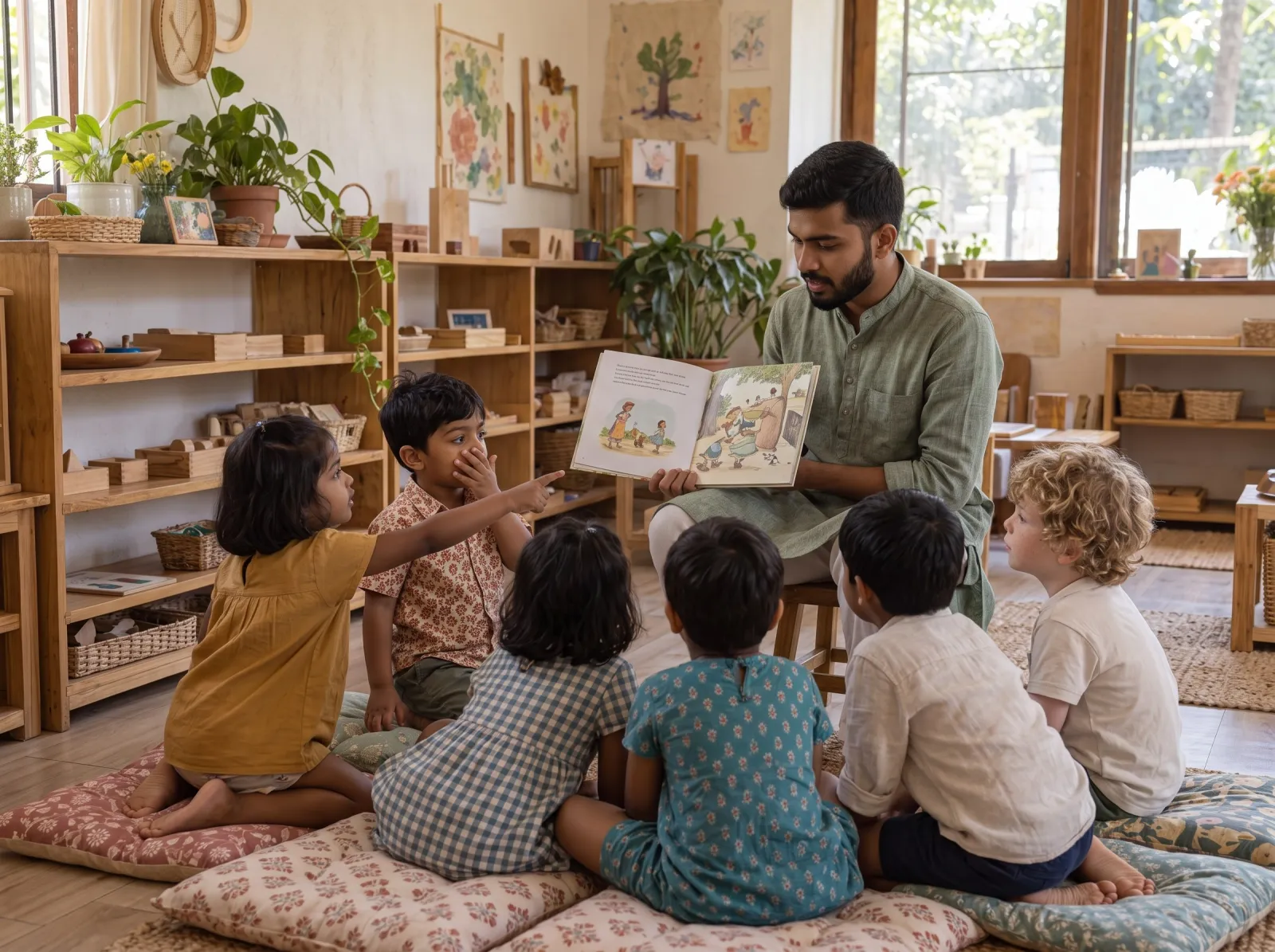
An educator reading a picture book aloud to children sitting on floor cushions, one girl pointing at the page.

Philosophy

A Thoughtful Approach to Early Childhood

At Thinkle, we believe young children learn best when they are actively involved in their own learning, when they can explore, make choices, ask questions, try things out and learn through experience.

Our approach draws inspiration from Montessori principles, play-based learning, Reggio Emilia and Finnish early childhood education. But Thinkle does not follow any educational label mechanically. We take the ideas that are developmentally meaningful, combine them thoughtfully and put them into practice in a way that makes sense for our children, our families and our context.

The result is a learning environment that is purposeful, hands-on, child-centred and rooted in real experiences.

We do not follow a method. We thoughtfully build an approach around how children learn.
Curriculum

Designed with reference to NCF-FS 2022

Thinkle curriculum is thoughtfully designed with reference to NCF-FS 2022. Through play based learning, sensory exploration, stories, creative activities and everyday experiences, we support each child’s overall development at their own pace.

Our approach focuses on building curiosity, confidence, independence, communication, early literacy and numeracy, physical development and emotional skills, while allowing children the time and freedom to learn through exploration.

Learning principles

Six Ideas We Work From

  1. The Child Comes First

    We see children as capable, curious individuals, each with their own interests, personalities and pace of development. We observe children closely and use what we notice to guide our experiences and support.

  2. Learning Through Doing

    Children understand ideas more deeply when they can experience them for themselves. They touch, move, build, sort, pour, create, experiment and participate, rather than simply being told what something means.

  3. Purposeful Play

    Play is not simply a way to keep children occupied. It is one of the ways children naturally develop thinking, language, movement, relationships, creativity and problem-solving skills. At Thinkle, we make sure play has something meaningful for children to discover.

  4. The Environment Matters

    The classroom is part of the learning experience. We intentionally prepare spaces and materials that encourage independence, concentration, exploration, movement and meaningful interaction. A calm environment gives children the space to focus, explore and think.

  5. Real Before Abstract

    Children often understand ideas better when they first experience them in the real world. Before symbols, worksheets or abstract concepts, we give children opportunities to handle real objects, experience real actions and make meaningful connections.

  6. Independence With Guidance

    We want children to experience the satisfaction of “I can do it.” Teachers are there to observe, encourage and support when needed, but they also know when to step back and give children the opportunity to try, make mistakes, solve problems and discover for themselves.

Meaningful experiences

Ordinary Moments Are the Curriculum

At Thinkle, some of the richest learning happens in ordinary moments. A child pouring water, building with loose parts, preparing food or looking closely at a leaf is doing much more than keeping busy. They are concentrating, comparing, communicating, testing ideas, making connections and becoming more independent.

We intentionally create and plan for these experiences. Rather than starting with a worksheet or a concept and finding an activity to teach it, we start with the experience. The vocabulary, mathematical thinking, scientific ideas, problem-solving and reasoning grow naturally from what children are doing and discovering.

Real experiences first. Learning grows from them.

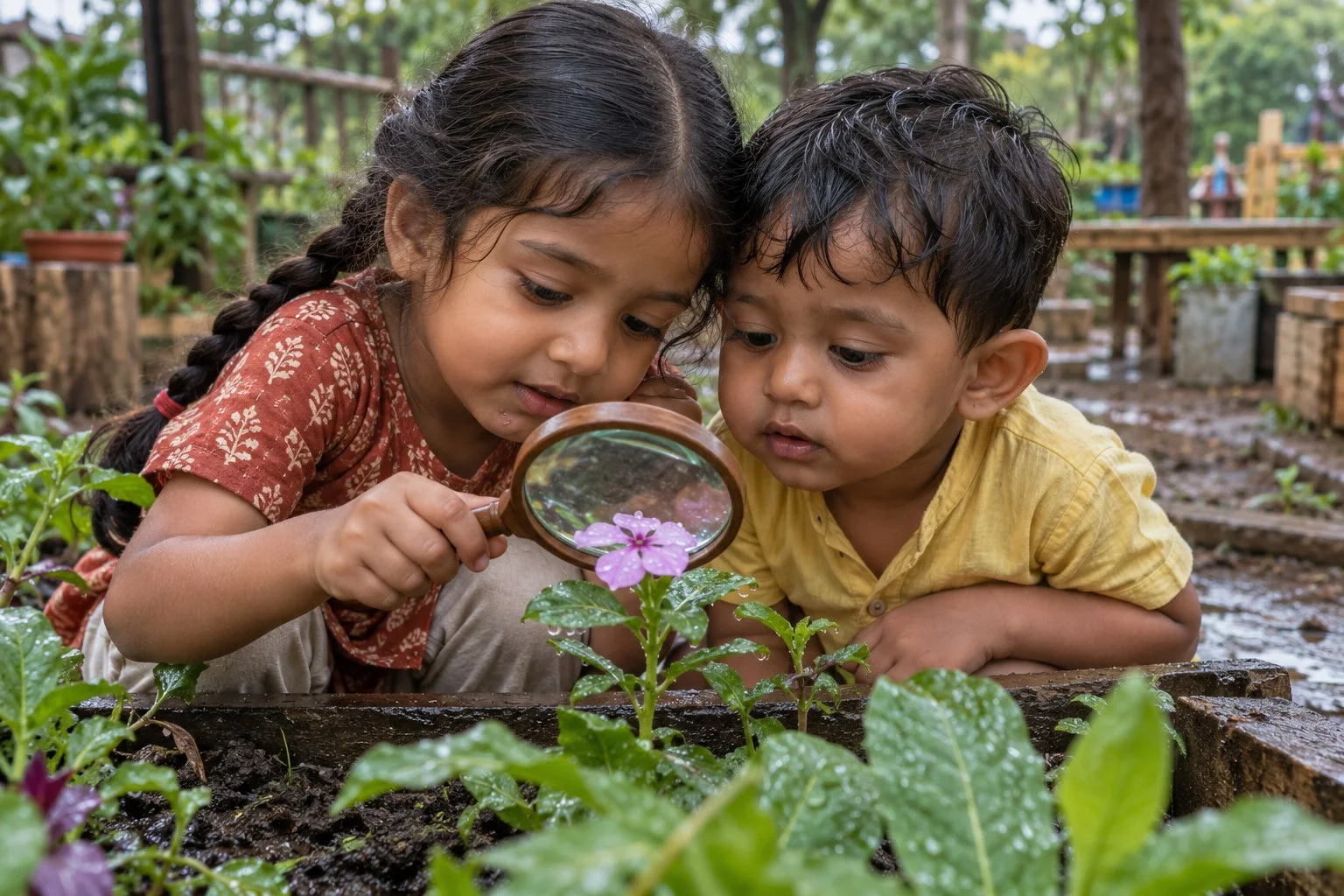
Two children crouching head to head at a garden bed, the girl holding a magnifying glass over a small pink flower.
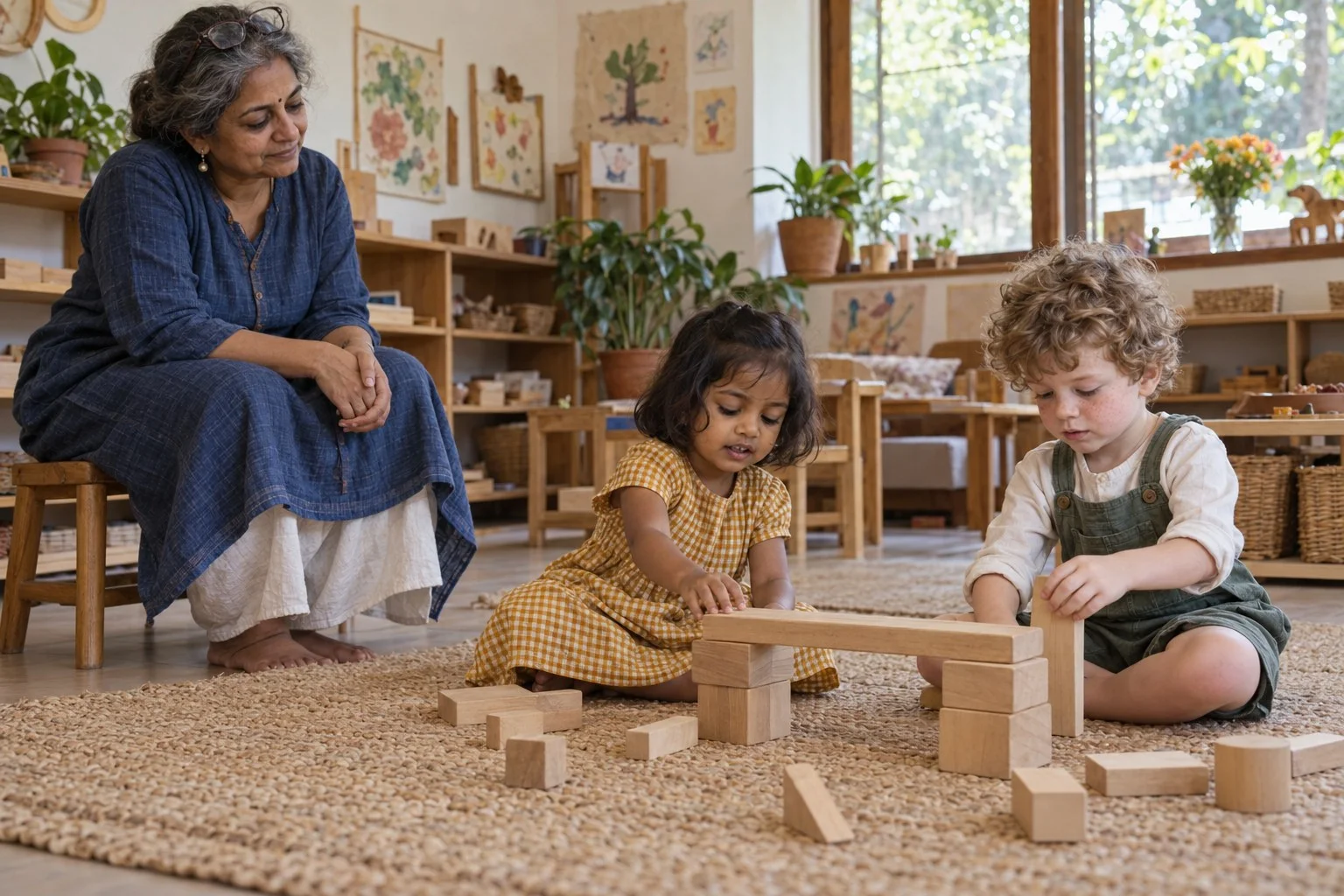
An educator sitting back on a low stool, watching two children build a bridge from wooden blocks.

Role of the teacher

The Prepared Adult

A thoughtfully prepared environment needs a thoughtful teacher.

At Thinkle, teachers are observers, guides and facilitators. They watch carefully, understand each child's developmental needs, introduce experiences, offer appropriate challenges and know when to step in, and when to step back.

We believe a teacher's role is not to do everything for a child, but to create the conditions for the child to try, discover and gradually become capable of doing more independently.

Role of the environment

The Room Does a Lot of the Teaching

The classroom is intentionally prepared to encourage independence, concentration, exploration and meaningful interaction. Materials are accessible to children, thoughtfully arranged and ready to be used, explored and returned to their place.

We aim for a calm, purposeful environment rather than one filled with unnecessary visual stimulation.

  • Low shelves and natural materials
  • Practical life tables and experiences
  • Construction and sensory areas
  • A garden and space to move outdoors
  • Books, role play and children's own work displayed around the room
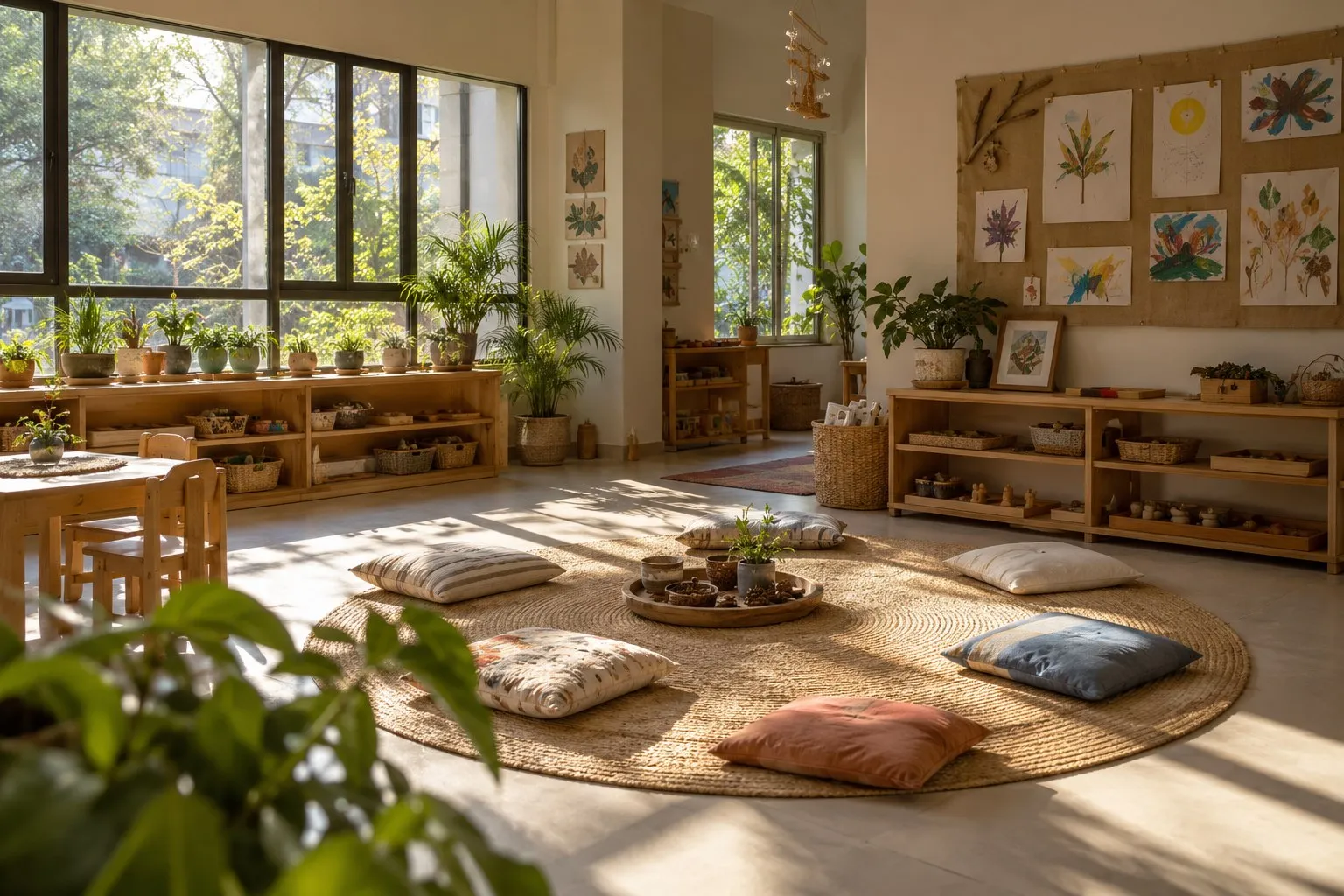
An empty, sunlit room with a round jute rug, floor cushions, low wooden shelves, plants and children’s paintings on the wall.

Open-ended materials

One Material. Many Possibilities.

Open-ended materials invite children to think, experiment, create and imagine rather than use an object in just one prescribed way.

A coconut shell can become a container, a scoop, part of a construction, a vessel for exploration or simply an object to investigate.

At Thinkle, materials are chosen not simply because they are interesting or beautiful, but because they offer children something meaningful to explore and discover.

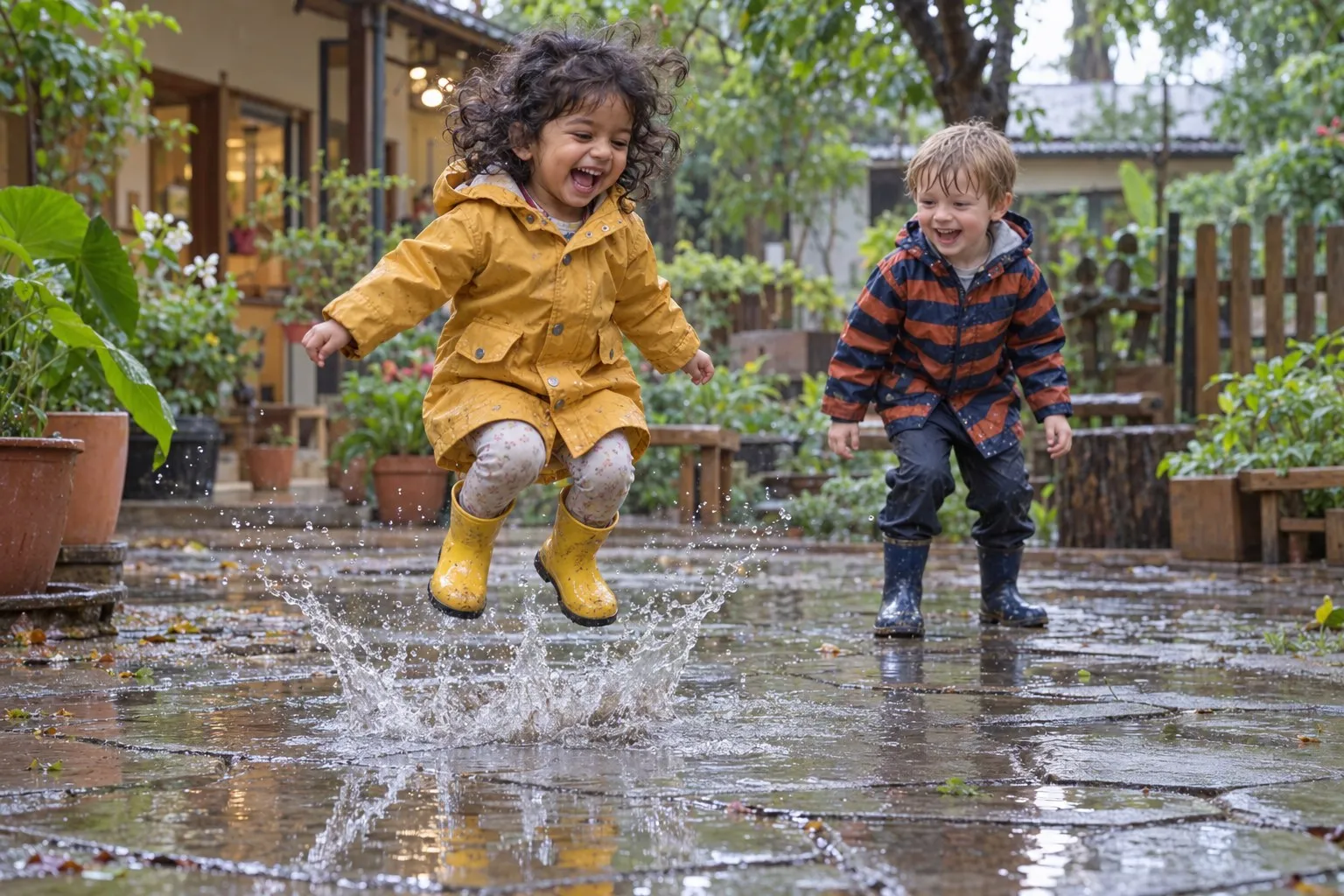
A girl in a yellow raincoat and boots jumping into a puddle, a boy in a striped jacket laughing beside her.

Outdoor learning

The World Is Another Classroom

Outdoor experiences are an important part of learning at Thinkle. Movement, nature, gardening, weather, observation, physical challenge and exploration give children opportunities to build confidence, develop awareness and stay curious about the world around them.

Questions

The Things Parents Ask First

Is Thinkle Montessori?

Thinkle is inspired by Montessori principles, alongside play-based learning, Reggio Emilia and Finnish early childhood education. We bring together the ideas we find meaningful for young children, rather than following one methodology rigidly.

Do you use worksheets?

Our early years approach prioritises hands-on experiences, conversation, movement, exploration and meaningful activities. Children learn by doing, rather than through worksheet-driven learning.

Is there free play?

Yes. We see free play as an important part of learning. Children are given opportunities to choose, explore, construct, imagine and interact, while teachers observe, support and extend their learning when appropriate.

Come and Watch It Happen

Come while the children are working. You will see the approach in practice long before anyone has to explain it.

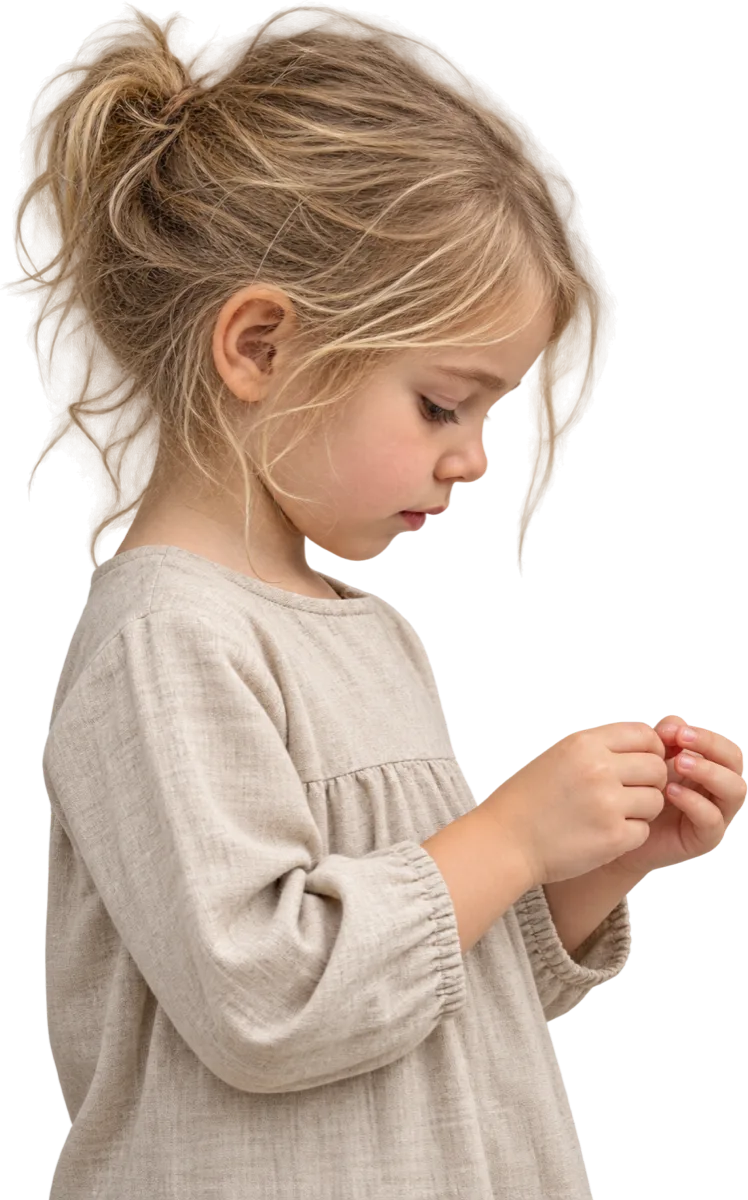
A girl of about four in profile, looking down at her own hands.